Preventing Ammonia Corrosion in Cattle Sheds & Livestock Housing
TECHNICAL DIRECTIVE ON CORROSION PREVENTION (GALVANIZING VS STANDARD PAINT)
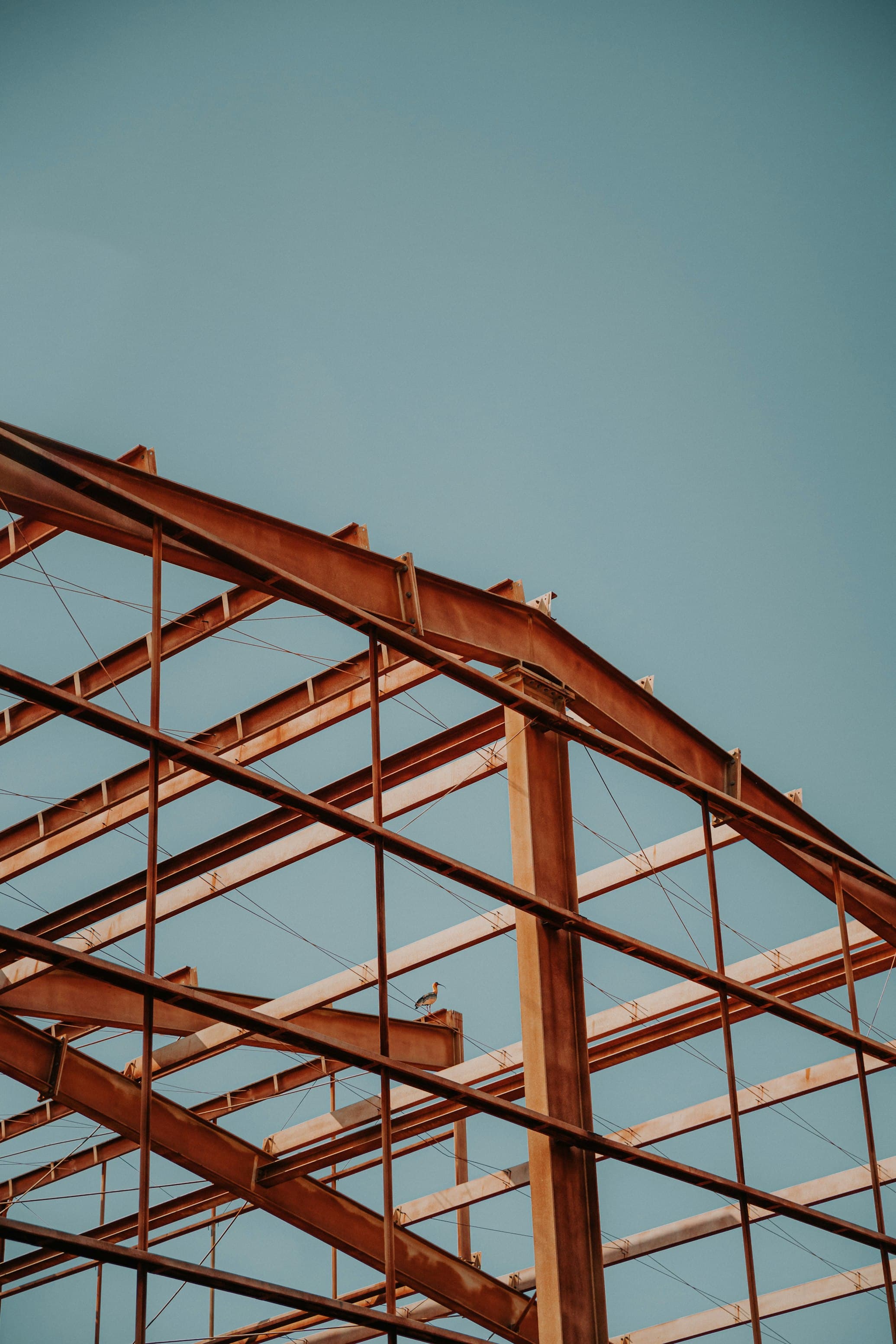
Livestock environments represent some of the most structurally corrosive atmospheres in the industrial and agricultural sectors. The chemical cocktail of livestock urea, ammonia gases, wet feed silage runoff, and manure slurry creates a constant acidic attack on structural steel columns. Understanding how to protect the structural spine of your building is part of specifying the coating.
1.0 The Chemical Chemistry of Ammonia Attack
Urea excreted by cattle and sheep naturally breaks down into gaseous ammonia (NH3) via bacterial urease enzymes present on the barn floor. In the presence of high humidity (which is constant in livestock housing due to animal respiration), ammonia gas dissolves into water droplets forming ammonium hydroxide (NH4OH), a highly alkaline solution.
This solution attacks standard structural steel primer paints, causing micro-fissures in the barrier coat. Once moisture and oxygen reach the raw carbon steel underneath, accelerated rust occurs, rusting out column bases in as little as 5 to 10 years.
2.0 Barrier Protection: High-Build Paint (Standard Primer)
Historically, many agricultural buildings were coated with standard oxide primer paints. Paint works purely as a **barrier protection system**—it seals the steel from the external air.
- **The Vulnerability:** Paint coatings are extremely vulnerable to scratching and impact from animals, machinery, and scraping equipment. A single scratch from a loader bucket exposes the raw steel underneath, initiating rapid rust creep under the surrounding paint. - **Maintenance Overhead:** Primer-painted steel in livestock sheds requires constant power washing, sandblasting, and re-painting every 5 to 7 years to prevent total structural failure. This is almost impossible to maintain on active livestock holdings.
3.0 Sacrificial Protection: Hot-Dip Galvanizing (BS EN ISO 1461)
For permanent, maintenance-free livestock buildings, **Hot-Dip Galvanizing** is the gold standard.
Unlike paint, which sits on top of the steel, hot-dip galvanizing involves immersing the fabricated steel members into a bath of molten zinc at **450°C**. This initiates a metallurgical reaction where the zinc and steel inter-diffuse, forming a series of tough **zinc-iron alloy layers** harder than the base steel itself.
- **Sacrificial Action:** Zinc acts as a sacrificial anode. If the coating is scratched or scraped by a tractor bucket, the surrounding zinc will corrode preferentially to protect the exposed steel, preventing rust creep. - **Complete Internal Coverage:** For hollow sections or truss tubes, the molten zinc flows completely inside the members, protecting the interior surfaces which paint sprays cannot reach.
BS EN ISO 1461 Galvanizing Standards
Hot-dip galvanizing is specified to BS EN ISO 1461 when the brief asks for it.
4.0 Summary and Financial Valuation
Hot-dip galvanizing is one coating option when the brief asks for it. The price is quoted with the building.
Forge & Frame recommends and supplies hot-dip galvanized structures for all livestock and crop housing projects across Scotland, ensuring that your heavy steel assets remain compliant, safe, and robust for decades to come.
Ready to design a building engineered for your location?
Launch 3D Configurator Engine